
BOARD MEMBERS
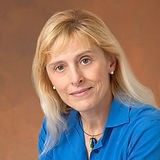




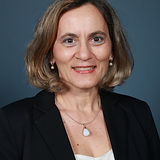

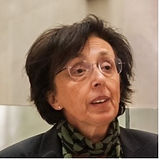

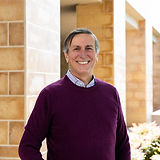
Andrea Alù
Chair of the Scientific Council
Distinguished Professor at the City University of New York (CUNY), Einstein Professor of Physics at the CUNY Graduate Center, Founding Director of the Photonics Initiative at the CUNY Advanced Science Research Center, Professor of Electrical Engineering at the City College of New York


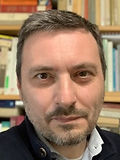




SCIENTIFIC COUNCIL

Andrea Alù
Chair of the Scientific Council
Distinguished Professor at the City University of New York (CUNY), Einstein Professor of Physics at the CUNY Graduate Center, Founding Director of the Photonics Initiative at the CUNY Advanced Science Research Center, Professor of Electrical Engineering at the City College of New York
Andrea Alù received his Laurea (2001), MS (2003) and PhD (2007) from the University of Roma Tre and was the Temple Foundation Endowed Professor at the University of Texas at Austin until 2018. In 2015 he was the Royal Netherlands Academy of Arts and Sciences (KNAW) Visiting Professor at the AMOLF Institute in the Netherlands.
His research interests span over applied electromagnetics, nano-optics, polaritonics and acoustics. Alù is credited with several discoveries, including the first experimental demonstration of a three-dimensional electromagnetic cloak of nonreciprocal phenomena in magnet-free metamaterials, of electromagnetic time-reflections and of extreme nonlinearities in quantum-engineered metasurfaces.
Dr. Alù is the President of the Metamorphose Virtual Institute for Artificial Electromagnetic Materials and Metamaterials, the Director of the Simons Collaboration on Extreme Wave Phenomena Driven by Symmetries and the Chair of the IEEE Joint New York Chapter. He is the Editor-in-Chief of Optical Materials Express, a Simons Investigator in Physics since 2016, a Full Member of URSI, a Life Fellow of the New York Academy of Sciences, and a Fellow of the National Academy of Inventors (NAI), the American Association for the Advancement of Science (AAAS), the Institute of Electrical and Electronic Engineers (IEEE), the Materials Research Society (MRS), Optica, the International Society for Optics and Photonics (SPIE) and the American Physical Society (APS). Since 2017, he has been a Highly Cited Researcher (Clarivate Web of Science). He has received several awards and recognitions for his research activities, including the Max Born Award (2024), the SPIE Mozi Award (2024), the IEEE AP-S Distinguished Achievement Award (2023), the Brillouin Medal (2021), the Blavatnik National Award in Physical Sciences and Engineering (2021), the IEEE Kiyo Tomiyasu Award (2020), the DoD Vannevar Bush Faculty Fellowship (2019), the ICO Prize in Optics (2016), the Edith and Peter O’Donnell Award in Engineering (2016), the NSF Alan T. Waterman Award (2015), the Franco Strazzabosco Award for Young Engineers (2013), the URSI Issac Koga Gold Medal (2011).
Andrea Alù is currently Distinguished Professor at the City University of New York (CUNY), Einstein Professor of Physics at the CUNY Graduate Center, Founding Director of the Photonics Initiative at the CUNY Advanced Science Research Center, Professor of Electrical Engineering at the City College of New York.

Gianni Cicali
Professor in the Department of Italian Studies at Georgetown University
Gianni Cicali (Florence, Italy) is a specialist in the history of Italian theater. He holds doctoral degrees from both Italy (Università di Firenze) and Canada (University of Toronto) and is a professor in the Department of Italian Studies at Georgetown University.
His interests focus on Italian theater and culture from the 15th to the 18th century; Renaissance and Baroque religious theater; cinema; migrations of Italian theater professionals to the Americas; and the Federal Theatre Project (USA 1935-39). His last book is Teatro ed Eresia nel Settecento Italiano (2021). He is also author Attori e ruoli nell’opera buffa italiana del Settecento (2005), and he also authored L’Inventio crucis nel teatro rinascimentale fiorentino (2012). He edited (with E. Mazzoleni, and A.M. Testaverde), Migrazioni teatrali e artistiche tra Europa e Americhe (2024). With Elena Mazzoleni he edited Dramaturgies et littératures en voyage special issue of Cahiers de littérature française (2020). Cicali also edited Teatro italiano fra testo performance e scena, special issue of Quaderni d’Italianistica (2015) He has published several articles on Italian Renaissance and Baroque theater, literature and arts, and on 18th-century theater.
Gianni Cicali has been Editor-in-chief of Quaderni d’Italianistica (journal of the Canadian Association for Italian Studies) from 2011 to 2015, and he is a member of the Advisory Board of Letteratura teatrale italiana (Italy), Quaderni d’Italianistica (Canada), Elephant & Castle (Italy) and Gentes(Italy) and a member of the editorial board of Renaissance and Reformation(Canada, till 2026). He is also member of the advisory board of AMAtI (Archivio Multimediale dell'Attore Italiano, Univ. di Firenze, Italy).

Riccardo Dalla-Favera
Percy & Joanne Uris Professor of Clinical Medicine
Professor of Microbiology & Immunology, Pathology & Cell Biology, Genetics & Development Director, Institute for Cancer Genetics, Columbia University
Riccardo Dalla-Favera was born in Legnano, Italy, in 1951 and grew up in Milan. He obtained his Medical Doctor degree from University of Milan. He moved to the U.S. in 1978 to join as a Fogarty Fellow the Laboratory of Tumor Cell Biology, National Cancer Institute, National Institutes of Health. In 1983 he joined the faculty of New York University, and in 1989 moved to Columbia University, where he is a Professor of Pathology & Cell Biology. In 1999 Dr. Dalla-Favera founded The Institute for Cancer Genetics at Columbia University, and to this day remains the Director. From 2005-2011, he also served as Director of the Herbert Irving Comprehensive Cancer Center at Columbia University
Dr. Dalla-Favera’s area of research is cancer genetics. His research team has contributed significantly to the understanding of the pathogenesis of cell malignancies, including B Cell Lymphoma, and Chronic Lymphocytic Leukemia. His work is quoted in major textbooks of medicine and oncology as it directly impacts the diagnostics and therapeutic targeting of these diseases.
Dr. Dalla-Favera’s work is widely recognized by numerous National and International prizes and awards, including the 2006 William Dameshek Prize from the American Society of Hematology (ASH), the 2017 American Association for Cancer Research GHA Clowes Memorial Award, and the 2017 Léopold Griffuel Award in Basic Research from the Association pur la Reserche sur le Cancer (ARC), France. He is an elected member of the U.S. National Academy of Medicine and the U.S. National Academy of Sciences. https://www.genetics.cumc.columbia.edu/profile/riccardo-dalla-favera-md

Leila De Floriani
Full professor, University of Maryland at College Park, with a joint appointment at the Department of Geographical Sciences and at the University of Maryland Institute for Advanced Computer Studies (UMIACS).
Leila De Floriani is a full professor at the University of Maryland at College Park with a joint appointment with the Department of Geographical Sciences and the University of Maryland Institute for Advanced Computer Studies (UMIACS). She has previously been a full professor of Computer Science at the University of Genova since 1990, where she started the first undergraduate and graduate curricula in computer graphics in Italy. In her long career, she has also held positions at the Italian National Research Council, at the University of Nebraska and at Rensselaer Polytechnic Institute. She has authored over 300 peer-reviewed scientific publications in the areas of computer graphics, geometric modeling, scientific data visualization, spatial data processing, shape analysis, also garnering several best paper awards. Her current research focuses on geospatial data analysis and topology-based data visualization.
Leila De Floriani is a Fellow of the IEEE, of the International Association for Pattern Recognition (IAPR), and of the Eurographics Association. She was named a Pioneer of the Solid Modeling Association for her early contributions in the field andreceived the IEEE Computer Society Golden Core recognition for her long-standing service to the Computer Society. She is also an inducted member of the IEEE Visualization Academy, and of the IEEE Honor Society Eta Kappa Nu. She served as the 2020 President of the IEEE Computer Society, and she is currently a member of the IEEE Board of Directors. She has been a member of the Computing Research Association Board from 2020 to 2023. She has been the editor-in-chief of the IEEE Transactions on Visualization and Computer Graphics (TVCG) from 2015-2018 and served as an associate editor for IEEE TVCG from 2004 to 2008. De Floriani is currently an editor of several international journals including the ACM Transactions on Spatial Algorithms and Systems, Computers and Graphics, Computer Science Review, GeoInformatica, and Graphical Models. She has served on the program committees of over 150 leading international conferences, contributing to several conferences in a leadership capacity. Please see https://users.umiacs.umd.edu/~deflo/for more information.

Alessandra Ferrajoli
Professor of Medicine; Deputy Chair, Department of Leukemia;
Patient Safety and Quality Officer, Department of Leukemia; Associate Medical Director, Leukemia Center; at University of Texas MD Anderson Cancer Center
Dr. Ferrajoli is an academic hematologist/oncologist practicing in the Leukemia Department at the University of Texas, MD Anderson since 2001. Her main area of interest include the treatment and biology of chronic lymphocytic leukemia and its variants, and treatment of elderly patients with acute and chronic leukemia. She has authored and co-authored more than three hundred and fifty publications in peer reviewed journals. Dr. Ferrajoli serves on numerous journal editorial boards and grant proposal study sessions for several US and European Agencies. She is a member of professional societies such the American Society of Hematology (ASH), the American Society of Clinical Oncology (ASCO), International Society of Geriatric Oncology (SIOG), the European Society for Medical Oncology (ESMO) and the European Hematology Association (EHA).

Filippo Menczer
Luddy Distinguished Professor of Informatics and Computer Science, Director of the Observatory on Social Media at Indiana University
Filippo Menczer is a university distinguished professor, the Luddy professor of informatics and computer science, and the Director of the Observatory on Social Media at Indiana University, Bloomington. He has courtesy appointments in cognitive science and physics. He holds a Laurea in Physics from the Sapienza University of Rome and a Ph.D. in Computer Science and Cognitive Science from the University of California, San Diego. Dr. Menczer is a Fellow of the ACM, a Fellow of the Center for Computer-Mediated Communication, a Senior Research Fellow of The Kinsey Institute, and a member of the Center for Complex Networks and Systems Research (CNetS). He previously served as division chair in the IUB School of Informatics and Computing, director of CNetS, visiting scientist at Yahoo Research, Fellow of the Institute for Scientific Interchange Foundation in Torino, Italy, and Fellow-at-large of the Santa Fe Institute. He has been the recipient of Fulbright, Rotary Foundation, and NATO fellowships, a Career Award from the National Science Foundation, and the ICWSM Test of Time Award from AAAI. His research interests span Web and data science, computational social science, science of science, and modeling of complex information networks. In the last fifteen years, his lab has led efforts to study online misinformation spread and to develop tools to detect and counter social media manipulation. This work has been covered in many US and international news sources, including The New York Times, Wall Street Journal, Washington Post, NPR, PBS, CNN, BBC, Economist, Guardian, Atlantic, Reuters, Science,and Nature. Menczer received multiple service awards and currently serves as associate editor of the Network Science journal and on the editorial boards of EPJ Data Science, PeerJ Computer Science, andHKS Misinformation Review.

Franco Pierno
Full Professor in Italian Linguistics, University of Toronto, Canada
Franco Pierno, born in Canada and educated in Europe, received his Laurea in the History of the Italian Language from the University of Pavia. He then obtained a Ph.D. in Romance Philology by completing a thesis on Italian Linguistics at the University of Strasbourg.
He is currently a Full Professor in Italian Linguistics at the University of Toronto and an "Accademico della Crusca" (Florence).
He was trained in Italian Lexicography at the Lessico Etimologico Italiano (Saarbrücken) under the supervision of Max Pfister (†). Before coming to Toronto, he taught at the universities of Strasbourg, Basel, and Neuchâtel.
He has been invited as a visiting researcher by the following academic institutions: John Carter Brown Library (Brown University); Centro di Dialettologia della Svizzera Italiana (Bellinzona); Centre d'Études Supérieures de la Renaissance(Tours); Fondation Maison Sciences de l'Homme (Paris, France); Université de Bordeaux; TU Universität Dresden.
Since 2021, he has been supervising the research group "OIM Canada-USA-Puerto Rico", NorthAmerican chapter of the Osservatorio degli Italianismi nel Mondo(OIM), one of the fundamental research projects of the Accademia della Crusca. The program, directed by Matthias Heinz and Lucilla Pizzolli, aims to create a database that will serve as a collection of all Italian words and words of Italian origin that are used in other languages.

Amilcare Porporato
Thomas J. Wu '94 Professor of Civil and Environmental Engineering and the High Meadows Environmental Institute, Princeton University
Amilcare Porporato earned a Master Degree in Civil Engineering (summa cum laude) in 1992 and a Ph.D. in Hydraulic Engineering in 1996 from the Polytechnic of Turin, where he was appointed as a researcher and then associate professor. He moved to Duke University in 2003, where he then became the Addy professor in the Department of Civil and Environmental Engineering with a secondary appointment with the Nicholas School of the Environment. Currently is the Thomas J Wu ’94 Professor of Civil and Environmental Engineering and the High Meadows Environmental Institute at Princeton University. His main research interests regard nonlinear and stochastic dynamical systems, hydrometeorology and soil-atmosphere interaction, soil moisture and plant dynamics, soil biogeochemistry, ecohydrology and environmental thermodynamics. Porporato is author of more than 200 peer-reviewed papers, several publications presented at national and international conferences and invited talks. He is also co-author of the book "Ecohydrology of water-controlled ecosystems" (Cambridge UP, 2004), the edited the book "Dryland Ecohydrology" (Springer, 2005), and "Ecohydrology: dynamics of life and water in the critical zone" (Cambridge UP, 2022).
Porporato received the Arturo Parisatti International Price (1996), the 2007 Utku award, the first Landolt & Cie Visiting Chair in “Innovative Strategies for a sustainable Future” at EPFL (2008-9), the 2010 Earl Brown II Outstanding Civil Engineering Faculty Award, Lagrange fellowship from Polito-CRT-ISI, AGU fellow (2012), Borland lecture in Hydrology (Hydrology Days, 2015), 2016 AGU Hydrology award, highly cited researcher (Clarivate, 2018 and 2019), and the Dalton Medal (EGU, 2022). Porporato has been Editor of Water Resources Research (AGU) (2004-2009) and Hydrological Processes (2011-2017). He is also member of the editorial board of Entropy, Advances in Water Resources, and the Hydrologic Science Journal. Among other things, he was chairman and convener of the Ecohydrology sessions of the AGU Spring Meeting in 2001 and 2002 and of the EGU in 2004-2006. Porporato has been part of the Italian research groups of Turbulence and Vorticity and of Climate, Soil and Vegetation Interaction, an adviser for real-time forecasting in the Piedmont Region (Italy), and ecohydrology (US National Academy). He has also been the didactic coordinator for the International School "Hydroaid: Water for Development", co-organized by the Polytechnic of Turin and the Italian Ministry of Foreign Affairs.

Patrizia Rossi
Deputy Associate Director for Nuclear Physics, Jefferson Lab
Patrizia Rossi joined Jefferson Lab as the Deputy Associate Director for Nuclear Physics in 2012. She graduated in Physics from the University of Rome in 1986. In 1990 she obtained a permanent position at the LNF-INFN (Italy), where she is now Research Director (on leave). Her scientific research activity has been/is carried out in the field of hadron and nuclear physics aimed at studying the structure of the nucleon and the nature of strong interaction in terms of fundamental constituents of Quantum Chromodynamics. In addition to her research at Jefferson Lab, she has carried out experiments at DESY, ESRF, LNF. Since 2013 she has been a Research Professor at George Washington University. She is Managing Editor for “Reviews” and “Letters to the Editors” of EPJA. She served/is serving on many Scientific Committees among which the US High Energy Physics Advisory Panel (HEPAP) and the Nuclear Science Advisory Committee (NSAC). She has co-authored over 250 refereed journal papers.

Alberto Salleo
Full Professor of Materials Science and Engineering, Department Chair, Materials Science and Engineering, Stanford University
Alberto Salleo is Full Professor of Materials Science & Engineering and Department Chair at Stanford University. Alberto Salleo holds a Laurea degree in Chemistry from La Sapienza and graduated as a Fulbright Fellow with a PhD in Materials Science from UC Berkeley in 2001. For his PhD Alberto studied the origins of high-power laser damage in synthetic silica, a fundamental hurdle in the development of the National Ignition Facility at Lawrence Livermore National Laboratory. From 2001 to 2005 Alberto was first post-doctoral research fellow and successively member of research staff at Xerox Palo Alto Research Center, the famed innovation centers in the Silicon Valley. At PARC Alberto conducted research on the fabrication and characterization of plastic-based electronics and printing of optoelectronic components for displays. In 2005 Alberto joined the Materials Science and Engineering Department at Stanford as an Assistant Professor.
While at Stanford, Alberto won the NSF Career Award, the 3M Untenured Faculty Award, the SPIE Early Career Award, the Tau Beta Pi Excellence in Undergraduate Teaching Award, and the Gores Award for Excellence in Teaching, Stanford’s highest teaching honor. Alberto is Associate Editor of MRS Communications since 2011 and has published over 200 peer-reviewed articles in addition to editing 2 books. He has been a Thomson Reuters Highly Cited Researcher since 2015, recognizing that he ranks in the top 1% cited researchers in his field. In 2020 he was knighted as Cavaliere Ordine al Merito della Repubblica Italiana for his service to Italy and the Italian scientific community in the Bay Area.

Alessandro Sette
Professor and Member
La Jolla Institute for Immunology, Division of Vaccine Discovery
Co-Director of the Center for Vaccine Innovation
Center for Infectious Disease and Vaccine Research
Center for Autoimmunity and Inflammation
University of California, School of Medicine
Alessandro Sette is Professor and Member at La Jolla Institute for Immunology, Division of Vaccine Discovery, and Co-Director of the Center for Vaccine Innovation, Center for Infectious Disease and Vaccine Research, Center for Autoimmunity and Inflammation at University of California, School of Medicine.
Prof. Sette devoted more than 40 years to the study of immune responses to cancer, autoimmunity, allergy, and infectious diseases. Dr. Sette is a coauthor of over 1000 peer-reviewed publications (H-factor of 190), is an inventor on 41 US issued patents and is identified by Clarivate as one of the Top Highly cited investigators. Named as one of the top 400 influential researchers in the last 15 years (out of 15 million worldwide) and is ranked 4th amongst Italian Scientists in Biomedical Sciences.
Dr.Sette has received several awards including Oregon State University Biological Colloquium, the American Association of Immunologists Investigator Award, American Liver Foundation for Biotechnology Companies, International Immunomics and Immmunogenetics Society, the 10th Annual ViE Vaccine Industry Excellence Award, the 2021 Gold Medal from the Italian Society of Internal Medicine (SIMI), and the Boulle-SEI International Award (Alicante, Spain 2021). He is Elected Fellow of the AAAS (2020); Elected Member of the American Academy of Microbiology (2023), Elected Honorary Member of the Accademia Medica di Roma (2021); and Fellow of Sigma Xi Scientific Research Honor Society.
His laboratory defines in chemical terms the specific structures (epitopes) that the immune system recognizes, and uses this knowledge to measure and understand immune responses. His laboratory studied a diverse set of diseases, ranging from HIV, HBV, HCV, Allergies, Dengue, Zika, Chikungunya, malaria, M. tuberculosis, B. pertussis, and most recently, SARS-CoV-2.
His lab was first to define successful adaptive response to SARS CoV2, by studying mild convalescent samples, and defined durability of immune memory in natural infection and vaccination. Reported the phenomenon of SARS CoV2 preexisting immune memory in unexposed donors, and demonstrated its influence on vaccination outcomes. Demonstrated that T cell responses are largely preserved in terms of recognition of SARS CoV2 variants, including Omicron and Delta. His lab is currently involved in the study of potential pandemic threats and microbial outbreaks, including Avian Flu and MPOX.
Since the start of the pandemic advocated a fact-based approach to informing the general public, though publications, social media and media interviews This resulted in over 600 interviews which were published and/or aired in over 100 different countries. The epitope pools developed by the group are used to measure responses; they have been provided to hundreds of labs, in tens of different countries in 6 continents. The Data generated by the group and by the scientific community at large are constantly curated and made freely available to the scientific community through the Immune Epitope Database (IEDB).